
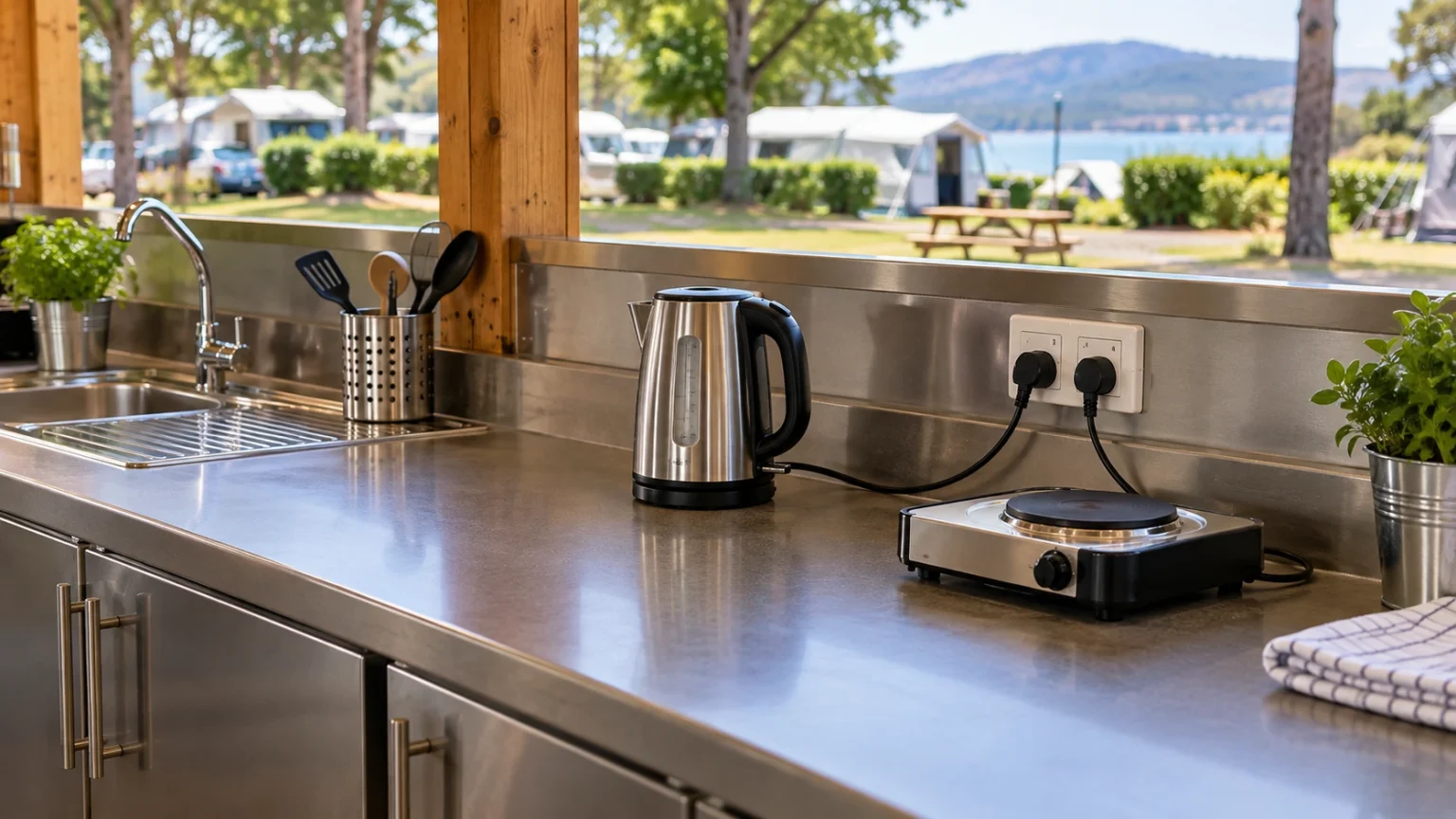
A shared campsite kitchen can get busy at mealtimes: someone fills a kettle, another guest washes vegetables, and bags and cables compete for counter space. Reducing electrical risks around campsite cooking facilities starts with a simple habit: keep electricity away from water, heat and damaged equipment. A quick check before cooking can prevent a small problem from becoming an emergency.
Look at where the sockets, sinks and cooking surfaces are before setting out your food. Choose a dry, stable place for an appliance, with its cord clear of taps, hot pans and walkways. Keep bags and damp clothing off the counter so they cannot brush against a plug or trap heat around an appliance.
Shared facilities may have instructions for particular equipment or sockets. Read them, and ask campsite staff if you are unsure how something works. If a socket is loose, cracked, discoloured or wet, leave it unused and report it. The same applies to an appliance that smells hot, sparks or repeatedly stops working.
Keep children within sight while appliances are in use. A trailing cord can pull a kettle or hot food from a worktop even when the electrical connection itself is sound. Position handles and cables where someone passing behind you is unlikely to catch them.
A campsite kitchen may provide cooking equipment, while guests may also bring small appliances. In either case, check the cord and plug before use. Frayed insulation, exposed wires, bent plug pins or signs of scorching are reasons to stop and use another appliance. Do not try to make a damaged cord work with tape.
Plug an appliance directly into a suitable socket where practical. Extension leads and multi-plug adapters can make a crowded kitchen harder to manage, especially near sinks or hot surfaces. Avoid connecting several cooking appliances to one adapter; their combined demand may exceed what it can safely handle. If you need an extension lead, follow the campsite’s rules and the lead’s instructions, keep it dry, and route it where it will not be stepped on or tripped over.
For example, imagine a kettle and a portable hotplate plugged into the same adapter beside a sink. Moving the kettle farther from splashes solves only part of the problem: the adapter is still handling two heating appliances in a wet, busy spot. Using an appropriate socket for each appliance, if available, and clearing the counter addresses both concerns.
Wet hands and electrical plugs are a poor combination. Dry your hands before plugging in or unplugging an appliance, and move it away from the sink before filling a jug or washing dishes. If water spills near a socket or appliance, stop using the affected area. Tell campsite staff so it can be checked before anyone uses it again.
Heat matters too. A cable resting against a hob, burner or hot pan can be damaged without anyone noticing immediately. Give appliances room for ventilation according to their instructions, and keep paper towels, packaging and other clutter away from hot equipment. Unplug portable appliances when you have finished with them and they are safe to handle.
If you are cooking outdoors, check what facilities and connections the campsite permits. Equipment intended for a dry indoor counter may be unsuitable for rain, damp ground or an exposed picnic table. Never run a cord through a puddle or across an area where it may be crushed by a door or vehicle. Choose equipment intended for the conditions and follow the site’s instructions.
A tripped power supply, unusual buzzing sound or burning smell is a signal to stop using the appliance. Switch it off if you can do so safely, and let campsite staff know what happened. Do not repeatedly reset a tripped supply or move the same suspect appliance to another socket to keep cooking; the cause may still be present.
If someone receives an electric shock, do not touch them while they may still be in contact with the electrical source. Have the power disconnected if it can be done safely, call the local emergency number, and follow the dispatcher’s instructions. Electrical faults and injuries need appropriate help, even if the person initially seems well.
A small spill offers another useful example. Suppose water runs across a counter toward a plugged-in toaster. The sensible first step is to keep hands away from the wet appliance and socket, prevent others from using that space, and alert staff. Trying to wipe beneath the plug while it remains connected could add to the risk.
For more detailed information on this topic, read our guide on How to Plan a Comfortable Camping Holiday with a Caravan.
Shared kitchens work best when each guest leaves the space ready for the next person. After cooking, switch off and unplug your portable equipment, let it cool, and clear away food scraps and spills. Coil cords loosely for storage rather than wrapping them tightly around a hot appliance. Report damaged equipment instead of leaving another guest to discover the fault.
Check opening times and available facilities when planning meals. If a guest kitchen is available only during part of the season, a meal plan that depends on using it may need to change. At a campsite where outdoor grilling is an option, use the designated arrangements and follow the site’s guidance rather than improvising an electrical setup outside.
Electrical safety in a campsite cooking area comes down to noticing the conditions around you: a wet counter, a crowded socket, a damaged cord or a cable too close to heat. Deal with those issues before cooking, and stop when equipment behaves unexpectedly. Those small decisions help keep a shared space practical and safer for the people using it next.