
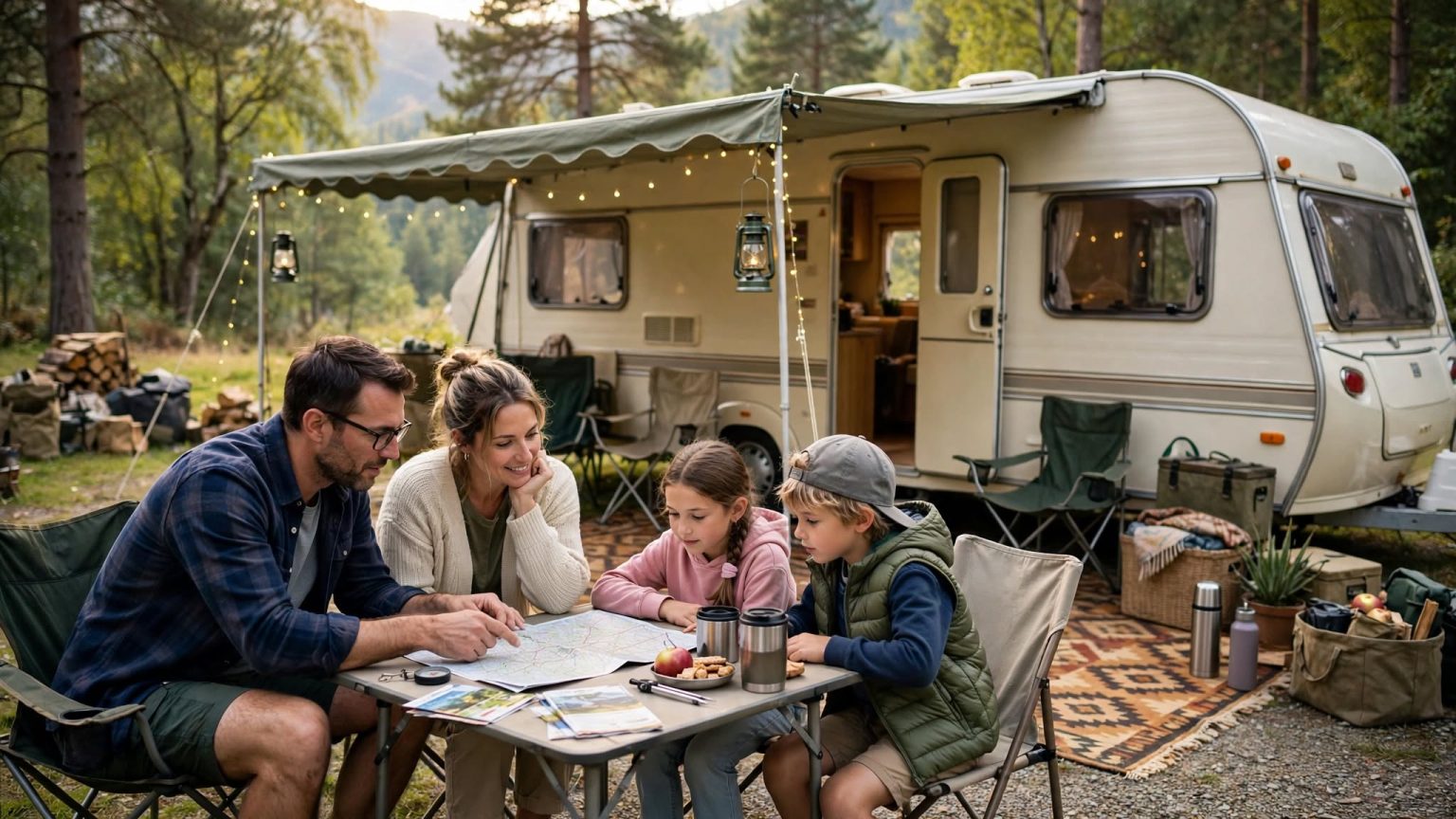
A caravan holiday gives you the freedom to explore new places while keeping many of the comforts of home close at hand. Instead of packing and unpacking at different hotels, you can travel with your own sleeping space, cooking facilities, storage, and everyday essentials.
However, a comfortable camping holiday with a caravan still requires careful planning. Choosing a suitable campsite, organizing your equipment, preparing meals, checking utilities, and planning the journey can make a noticeable difference once you arrive. A little preparation before departure can help you spend more time enjoying the trip and less time solving avoidable problems.
Start by looking for a campsite that can comfortably accommodate your caravan. Pitch dimensions, access roads, ground conditions, and available facilities can vary considerably between locations.
Consider what you actually need rather than automatically choosing a site with the longest facilities list. For a short weekend, basic amenities may be enough. For a longer caravan camping holiday, access to showers, toilets, laundry facilities, drinking water, waste disposal, and electrical hook-ups may make the stay more convenient.
Think about the surrounding area as well. A quiet rural campsite may suit travelers looking for peaceful evenings, while families might prefer somewhere close to walking routes, attractions, shops, or recreational areas.
If possible, confirm whether your allocated pitch is level, hardstanding, grass, or another surface. This helps you decide which leveling equipment and accessories to bring.
It is also useful to understand the campsite’s arrival procedure, parking arrangements, check-in times, and any rules concerning awnings, outdoor cooking, pets, or generators before setting off.
A comfortable caravan trip begins before the caravan leaves home. Check the general condition of the vehicle and make sure everything needed for the journey is properly secured.
Loose kitchen equipment, bottles, chairs, and other belongings should be stored so they cannot move around while traveling. Cupboards and drawers should close securely, while heavier items should be positioned carefully to avoid unnecessary movement.
Before departure, check the caravan’s tires, lights, windows, doors, towing connections, and other important components. Your tow vehicle should also be suitable for the caravan and prepared for the planned route.
Route planning matters too. A road that looks convenient on a map may include narrow lanes, difficult turns, steep sections, or restricted access that makes towing more stressful.
Limited space means thoughtful packing is more useful than simply bringing more belongings. Focus on items that serve a clear purpose during the holiday.
Your caravan essentials may include bedding, suitable clothing, cooking equipment, basic food supplies, toiletries, outdoor chairs, charging cables, a first-aid kit, leveling equipment, cleaning supplies, and items required for water or electrical connections.
Try to keep frequently used belongings somewhere easy to reach. For example, you should not have to unpack several storage compartments just to find a torch, rain jacket, or charging cable.
Weather should influence your packing decisions as well. Even during warmer months, evenings can become cool, and conditions can change quickly. Layers, waterproof clothing, suitable footwear, and extra bedding can make unexpected weather much easier to manage.
Caravan comfort depends heavily on how well basic facilities are managed. Before traveling, understand how your caravan’s water, electricity, heating, refrigeration, and waste systems operate.
If you are using an electrical hook-up, bring the correct equipment for your caravan and campsite. Avoid overloading the electrical system by running several high-demand appliances at the same time.
Water also requires some planning. Keep drinking water separate where appropriate, know where fresh water can be obtained, and identify the site’s designated wastewater disposal facilities.
Learning these routines before the holiday is particularly helpful for first-time caravan travelers. It is much easier to understand equipment at home than to figure it out after arriving at a campsite in poor weather or after dark.
Cooking in a caravan can be enjoyable, but limited worktop and storage space make complicated meals less practical. Planning a few simple dishes before departure reduces the amount of equipment and food you need to carry.
Choose ingredients that can be used across several meals. Bread, eggs, vegetables, pasta, rice, sauces, and easy-to-store ingredients can provide plenty of flexibility without filling every cupboard.
You can also prepare certain ingredients at home. Chopping vegetables or organizing portions beforehand can reduce preparation and washing up at the campsite.
Leave some flexibility in your meal plan. You may discover a local café, market, farm shop, or restaurant that you want to try during the trip.
Small adjustments can make a caravan feel much more relaxing. Keep walkways clear, assign storage areas for commonly used belongings, and avoid covering every available surface with equipment.
Ventilation is particularly important when cooking or when several people are sharing a compact space. Open vents or windows where appropriate and manage condensation before it becomes uncomfortable.
An awning or simple outdoor seating area can provide additional usable space when conditions allow. It gives you somewhere to eat, read, remove muddy footwear, or relax without making the caravan interior feel crowded.
Comfort and safety go together. A trip becomes much less relaxing when basic precautions have been overlooked. Check relevant equipment before departure, keep emergency items accessible, and make sure everyone traveling knows the campsite layout and essential caravan procedures.
It is also worth reviewing Camping Safety Tips Every Outdoor Traveler Should Know while preparing for the trip. General outdoor precautions become especially useful when caravan camping involves unfamiliar locations, changing weather, cooking outdoors, or spending time away from populated areas.
Avoid leaving safety planning until an issue occurs. Knowing where important equipment is stored and what to do in an unexpected situation can make problems easier to handle calmly.
Avoid scheduling every hour of the trip. Travel delays, weather changes, campsite conditions, and spontaneous activities can all affect your plans.
A flexible itinerary gives you room to change a walking day when rain arrives, spend longer somewhere interesting, or simply enjoy a quiet afternoon at the campsite. Caravan holidays often work well when the journey has enough structure to stay organized without turning the entire break into a timetable.
Planning a comfortable camping holiday with a caravan is mainly about preparing the essentials without overcomplicating the experience. Choose an appropriate campsite, check the caravan before traveling, pack thoughtfully, understand your water and power systems, and keep meals manageable.
Once those practical details are handled, you have more freedom to enjoy the reason for taking a caravan holiday in the first place: exploring new surroundings while having a familiar and comfortable place to return to at the end of the day.